Back Rolling: The Pro Painter's Trick for Flawless Walls
Ever wonder why a pro paint job looks so... perfect ? It's not magic, and it's not just the sprayer. It's a simple follow-up step called back rolling. Let's get into what it is, why you absolutely should do it, and how not to mess it up.
What is Back Rolling?
A key pro technique is back rolling. It isn't just re-rolling a wall; it's a deliberate step to make paint beautiful and tough. You simply roll over a freshly sprayed coat of paint while it’s still completely wet . 1
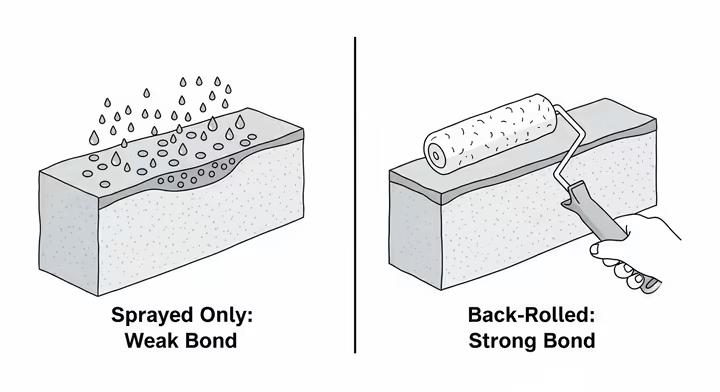
This technique is a planned part of the application process that ensures the paint performs as intended. Think of it like this, spraying paint is like putting lotion on your skin, it just sits on top . Back rolling is like rubbing it in , pushing the coating into all the tiny pores for a strong bond. 3
Why Bother Back Rolling?
A Super Strong Bond
Adhesion is everything for a long-lasting paint job. An airless sprayer shoots fine paint particles onto the wall, but on porous stuff like new drywall, the paint can “bridge” over tiny holes instead of filling them. 2 This traps microscopic air pockets under the paint, creating a weak bond that's just waiting to fail.
Back rolling fixes this. The roller's pressure collapses those bridges and shoves the paint into every nook and cranny . 1 The paint now physically locks into the wall instead of just sitting on it. 3
Skip this step, especially on a primer coat, and you're asking for trouble . As the house settles, that weak bond can crack, leading to widespread peeling paint years later. 8 And you can't fix it without stripping everything off... all because a simple step was skipped.
The Perfect Texture (Stipple)
You might think the smoothest wall is the best wall. Nope. A mirror, smooth surface, which is what a sprayer gives you, reflects light directly and highlights every tiny bump and wave in the drywall. 1
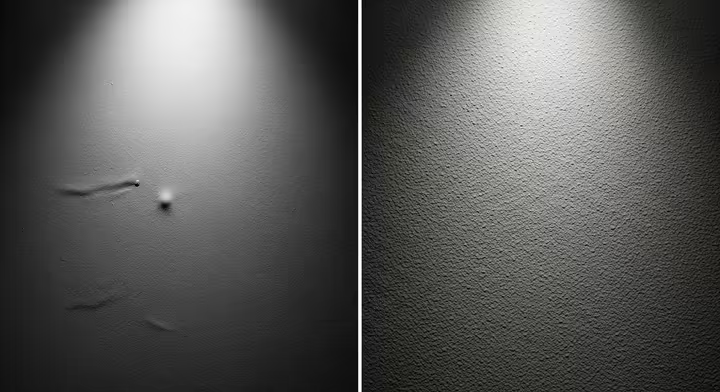
That’s why pros love a subtle, consistent texture called "stipple." Stipple is that fine, orange-peel texture you get from a roller, and back rolling after spraying creates a nice, uniform version of it. 1 This texture scatters light, which masterfully hides those little surface imperfections. 3
Plus, it makes your life easier later. With a back-rolled texture, you can do a quick touch-up with a small roller and it'll blend right in . 1 Try to touch up a perfectly smooth, sprayed-only wall, and you’ll get an obvious patch with a different texture, a permanent scar . 6
No More Blotches and Stripes
Ever see a wall where the paint looks shiny in some spots and dull in others? That's called "flashing" or "hatbanding." 12 It happens when the paint film is uneven or the wall absorbs paint differently.
Back rolling prevents this. It spreads the paint out evenly, leveling out any thick or thin spots left by the sprayer. 6 This ensures the final sheen is consistent across the whole wall, free from distracting blotches and streaks. 6
Fixing Mistakes on the Fly
Even pros can create a run or a heavy spot when spraying, for a beginner, it's pretty much guaranteed. 9 Back rolling is your instant quality control . The roller picks up any excess paint from a run or sag and smoothly blends it right in before the paint can set. 9, 8
It's a huge safety net for DIY painters. This real-time correction provides a margin for error and helps you get a pro finish even while you're still learning. 8
A Tougher, Thicker Coat
A paint's toughness, how well it washes and resists scuffs, depends on how thick it is when dry. This is called Dry Film Thickness (DFT), and every paint is designed to be applied at a specific thickness. 17 If it's too thin, it's weak.
A beginner sprayer often puts paint on too thin or unevenly. Back rolling helps even out the paint film, ensuring the entire surface gets a uniform and thick enough coat. 2 This ensures the paint is durable and washable, making it a lasting, protective finish. 6
When (and When Not) to Back Roll
So, when do you do it? The main rule is simple: the more porous the surface, the more you need to back roll.
Interior Walls? Always.
If you're spraying interior walls, especially new drywall, do you have to back roll? Yes. Always. 3 Drywall makers even recommend it to properly seal the porous paper and joint compound. 1 For a durable, good-looking finish in your home, back rolling should be considered standard practice . 9
What if I'm Not Spraying? (Laying Off)
This idea isn't just for sprayers. Pro painters use a similar technique called "laying off" when using a regular roller. 21 You apply a heavy coat of paint, then immediately go back over it with the now nearly empty roller, using light, continuous strokes from top to bottom. 23
The goal is the same as back rolling. It smooths out marks, gets rid of overlap lines (“lap marks”), and creates a uniform stipple. 14 The lesson? Whether you spray or roll, that final, light pass is what makes the finish look pro. 26
A Surface Guide
New, Unprimed Drywall and Plaster
This is where back rolling is most critical . New drywall and plaster are "thirsty" and absorb paint unevenly. 6 Spray a primer without back rolling here, and you'll get a blotchy, weak base. 6, 10
Sanding drywall also fluffs up paper fibers. Back rolling flattens and seals them down for a smoother finish. 1
Previously Painted, Sealed Surfaces
On a wall that's already painted and in good shape, the surface is sealed, so the need for adhesion is less critical. 20 But you should still do it. Back rolling ensures the new coat's texture and sheen are uniform, and it blends the sprayed areas with the brushed "cut-in" corners. 10
Textured Surfaces (Orange Peel, Knockdown, Stucco)
For textured walls, back rolling is vital. A sprayer might not get paint into all the little valleys and crevices of the texture. 8 This leaves tiny unpainted specks and a mottled look. 31
Back rolling shoves the paint into every cranny for 100% coverage. This gives you a more uniform color and a thicker, more durable paint film that protects the surface. 6
Surfaces to AVOID Back Rolling
Knowing when not to back roll is just as important. On smooth, non-porous stuff like metal doors, kitchen cabinets, or siding, you usually want a glass-like, factory-sprayed finish. 7 Paint doesn't need to be pushed into pores to stick here.
Rolling a freshly sprayed metal door would ruin that smooth finish with unwanted roller texture. For these specific jobs, a skilled spray-only application is the right move. 7
How to Back Roll: The Step-by-Step
Get Your Gear
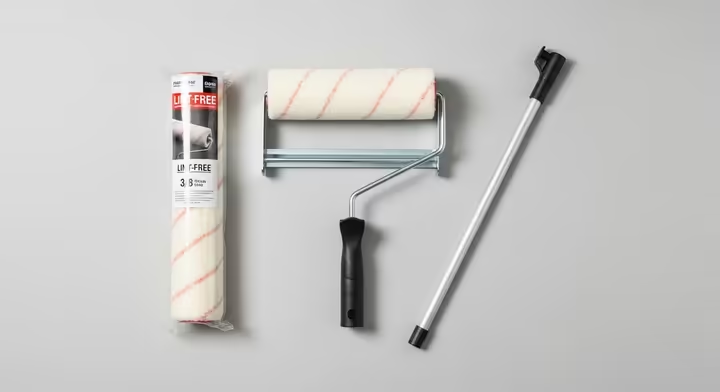
The Roller Cover and Nap
The "nap" of a roller cover is the length of its fibers. Rule #1: Match the nap length to the wall's texture. 34 Too long a nap on a smooth wall gives you a ropey texture; too short a nap on a rough wall won't reach the crevices. 36, 37
For most smooth or lightly textured interior walls, a quality, lint-free roller cover with a 3/8-inch or 1/2-inch nap is your best bet. 6, 34
Choosing Your Roller Cover
| Surface Type | Recommended Nap Size | Why and What to Know |
|---|---|---|
| Smooth Surfaces (New Drywall, Plaster) | 1/4" to 3/8" | A shorter nap gives the smoothest finish. A 3/8" is a great all-around choice for interior walls. |
| Lightly Textured Walls (Orange Peel) | 1/2" | Holds more paint to ensure full coverage on the subtle texture without creating too much stipple. |
| Medium to Heavy Texture (Stucco, Brick) | 3/4" to 1" | A long nap is needed to reach into the deep crevices of the texture for complete coverage. |
| Very Rough Surfaces (Cinder Block) | 1" to 1 1/4" | You need max paint-holding capacity to fill this highly porous and uneven surface. |
The Extension Pole
An extension pole isn't just for reaching high spots; it's essential for good technique. 39 It lets you roll from floor to ceiling in one smooth, continuous stroke. It's also way easier on your body, you use your core and legs instead of just your arm and back. 40
The Two-Person Team: Sprayer and Roller
This job is easiest with two people: one to spray, one to roll. The sprayer applies a wet coat to a 3 to 4-foot wide section of the wall. 6 The roller follows immediately behind.
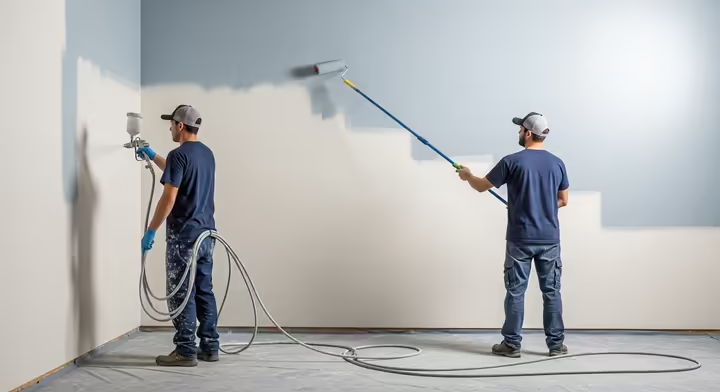
The key is to always maintain a "wet edge," meaning the roller has to hit the paint while it's still completely wet. 42 If the paint starts to get tacky, you're too late . 43 Rolling over drying paint creates a clumpy mess that's a nightmare to fix . 45
The sprayer sets the pace, staying just ahead of the roller. 47 Spray a section, roll that section. Repeat across the wall, always blending into the fresh wet edge.
The Right Moves
Pressure
The biggest rookie mistake is pushing too hard. Back rolling requires a light, consistent touch , the weight of the tool is usually enough pressure . 48 Your goal is to gently float the roller over the paint to set the texture, not to squeeze paint out of it. 23
Pushing too hard creates ugly ridges called "fat edges" or "tram lines." 50 It can also remove too much paint, resulting in a thin, weak coating.
Direction and Overlap
Roll in long, even, parallel strokes from top to bottom. Overlap each new stroke by about 50% to 75%. 49 This generous overlap is key to blending the paint seamlessly.
Once a section is done, do one final, super-light "lay-off" stroke from the very top to the very bottom without reloading the roller. This last pass orients the stipple pattern in the same direction, the secret to a uniform, pro-looking wall . 23
How to Mess It Up (And How to Avoid It)
What Happens if You Skip It
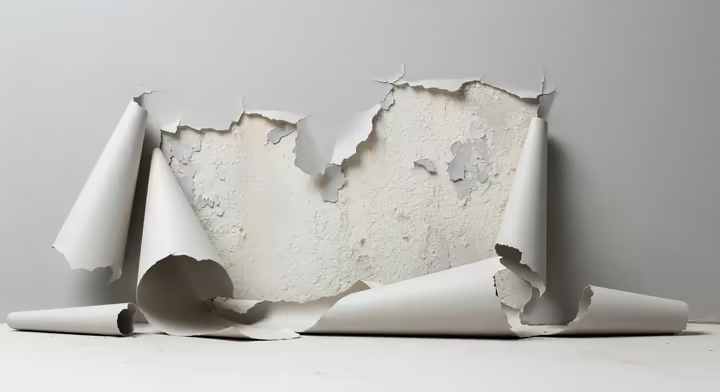
Future Peeling
Worst-case scenario? Your paint peels off in sheets . 4 A sprayed-only primer on new drywall has a weak bond. Over time, it fails, and the paint just flakes away, requiring you to strip the entire surface to fix it. 9
Visible Imperfections
A sprayed-only finish is unforgiving. Under the right light (or wrong light...), a wall that hasn't been back rolled will show every single flaw, making it look cheap and unfinished. 3
Sheen Problems and Flashing
You'll also get flashing and hatbanding. 13 The brushed corners won't match the sprayed walls, creating an ugly "picture frame" effect around the room. 55
The Touch-Up Nightmare
Good luck fixing any scuffs. Trying to touch up a sprayed-only wall with a brush or mini-roller leaves an obvious patch with a different texture. 6 You'll have to repaint the entire wall to fix one little spot.
Common Back Rolling Mistakes
Waiting Too Long
Timing is everything. If the paint gets tacky before you roll, you'll tear the forming paint skin and create a rough, goopy mess that will need to be sanded and recoated. 44 Always, always keep a wet edge.
Applying Too Much Pressure
Don't push so hard. A heavy hand creates visible lines ("fat edges") from the ends of the roller. 49 It can also make the paint film too thin in the middle, which hurts its durability. 51
Using a Roller That's Too Saturated
Your roller shouldn't be bone dry, but it shouldn't be dripping wet either. An oversaturated roller applies too much paint, which can lead to sags and runs. 8, 57
Using the Wrong Roller Cover
Get the right cover. A cheap roller can leave lint in your paint. And using the wrong nap size (too thick or too thin for your surface) will give you a blotchy or overly-textured finish. 12
Work Safe, Work Smart
Team Safety
Communication is Key
Talk to each other! The person spraying should clearly announce when they are starting and stopping. 58 The person rolling should communicate their position and readiness. No surprises. 59
Hose and Cord Management
The sprayer hose and electrical cord are major trip hazards . 60 Keep them coiled and out of the way as much as possible, and always watch where you're walking. 61
Ventilation and Personal Protective Equipment (PPE)
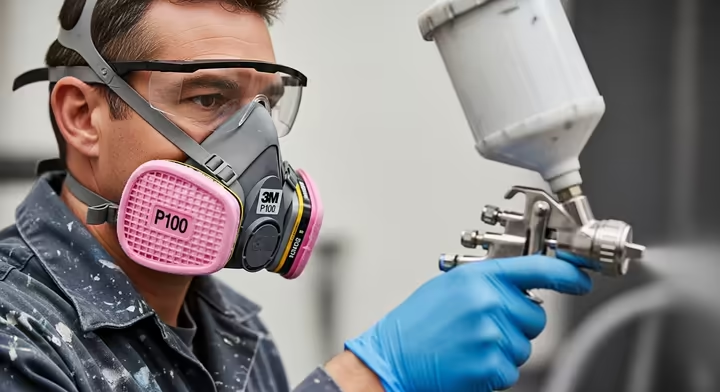
Ventilate the room, even with modern low-VOC paints, by opening windows and doors. 62 Both team members need safety glasses. The sprayer needs more, a properly fitted respirator is essential to avoid inhaling paint particles, along with full eye protection. 61
Don't Hurt Yourself
The Power of the Extension Pole
We said it before, and we'll say it again, use an extension pole . It lets you stand in a comfortable, upright posture and use your stronger core muscles. 39 This saves your back, arms, and shoulders from a world of hurt. 40, 66
Body Mechanics
Use your body correctly. Take regular short breaks to stretch your neck, shoulders, and wrists. 68 Bend with your knees, not your back, and use the extension pole to avoid over-reaching. 69 A pro finish isn't worth a pulled muscle .
Works cited
- Spray Painting and Back Rolling - Dulux Trade, https://www.duluxtrade.com.au/technical-advice/application/spray-painting-and-back-rolling/
- When and Why to Back-Roll After Paint Spraying - Titan Tool, https://www.titantool.com/blog/when-and-why-to-back-roll-after-paint-spraying
- How to Paint a House Flawlessly with Airless Sprayer by Back Rolling - YouTube, https://www.youtube.com/watch?v=JL5f9_uQdM0
- Why Back Roll? - Paint Life Supply, https://paintlifesupply.com/blogs/news/why-back-roll
- Back Rolling Paint - Johnson Brothers Painting!, https://www.johnsonbrotherspainting.com/back-rolling-paint.html
- Backroll After Paint Spraying: The Key to a Flawless Finish, https://www.paintaccess.com.au/blogs/company-news/backroll-after-paint-spraying-the-key-to-a-flawless-finish
- To Back Roll or Not To Back Roll? - The Idaho Painter, https://www.idahopainter.com/to-back-roll-or-not-to-back-roll
- What Is Backrolling & Should My Painter Do It? - Blank Canvas Painting, https://blankcanvaspainting.com/what-is-backrolling-should-my-painter-do-it/
- Backrolling Paint | Application Technique | Quality Finish, https://heritagepainting.info/backrolling-paint/
- Spray Painting and Back Rolling - Dulux Trade, https://www.duluxtrade.co.nz/technical-advice/application/spray-painting-and-back-rolling/
- Is back rolling after spraying necessary on pva primed and textured walls? : r/paint - Reddit, https://www.reddit.com/r/paint/comments/1bcqe6x/is_back_rolling_after_spraying_necessary_on_pva/
- How to Avoid Common Painting Mistakes | Sherwin-Williams, https://www.sherwin-williams.com/en-us/project-center/paint/how-to-avoid-painting-mistakes
- How to Fix Paint Roller Marks - The Hive Painting, https://thehivepainting.com/blog/how-to-fix-paint-roller-marks
- How To Avoid Paint Flashing, Streaks, Lap Marks On Walls - Eco Paint, Inc., https://www.paintingdenver.net/uncategorized/avoid-paint-flashing-streaks-lap-marks/
- www.behr.com, https://www.behr.com/pro/resources/paint-problem-solver/paint-problem-solver-detail/sagging#:~:text=paint%20to%20stick.-,Solutions,coat%20of%20top%20quality%20paint.
- HOW TO FIX A PAINT RUN. Painting hacks repairing drips & runs. Fixing paint sags. - YouTube, https://www.youtube.com/watch?v=Squvw-GSZuo
- The Importance of Mill Thickness in House Paint, https://www.crashofrhinospainting.com/blog/the-importance-of-mill-thickness-in-house-paint
- The Best Way to Measure Paint Thickness on Drywall | PosiTector 200 - DeFelsko, https://www.defelsko.com/resources/paint-thickness-measurement-drywall
- Application of Polymer Coatings or Linings with a Squeegee, Roller, and Brush, http://www.wolverinecoatings.com/TIB/Application_Coatings_or_Linings_by_Squeegee,_Roller,_Brush-TIB.pdf
- Question? Spraying new construction - Houzz, https://www.houzz.com/discussions/2490557/question-spraying-new-construction
- Back rolling paint : r/paint - Reddit, https://www.reddit.com/r/paint/comments/1ffzjp6/back_rolling_paint/
- How to back roll walls & why it should be done. - YouTube, https://www.youtube.com/watch?v=kx2J_k6nI68
- Super Quick Lesson: How to roll a wall with paint - YouTube, https://www.youtube.com/watch?v=snJ8kwcNTqE
- Laying Off Techniques with a Paint Brush | Hamilton Decorating Tools UK, https://www.hamiltondecoratingtools.co.uk/knowledge-room/guides/laying-off-brushes-techniques-and-uses/
- laying off - Brushworks Painting, https://brushworks.com.au/laying-off/
- Roller Painting - Best Way To Lay Off : r/paint - Reddit, https://www.reddit.com/r/paint/comments/1aidwir/roller_painting_best_way_to_lay_off/
- Flawless paint finish | Traditional Painter, https://traditionalpainter.com/flawless-paint-finish
- Why Back Roll After Spray Painting - Link Solutions, https://paintwithlinksolutions.com/why-back-roll-after-pray-painting/
- LEVEL 5 Drywall - Painting & Backrolling - Houzz, https://www.houzz.com/discussions/6193551/level-5-drywall-painting-and-backrolling
- Rule of thumb for backrolling exteriors? : r/paint - Reddit, https://www.reddit.com/r/paint/comments/1kubz2z/rule_of_thumb_for_backrolling_exteriors/
- Mastering the Back Roll Technique for Painting - TikTok, https://www.tiktok.com/@idahopainter/video/7112616353072287018
- How To Roll On Knock Down Wall Texture - Orange Peel Popcorn Wall Knockdown - YouTube, https://www.youtube.com/watch?v=M5xEhBRo-jA
- How to Texture Walls - The Home Depot, https://www.homedepot.com/c/ab/how-to-texture-walls/9ba683603be9fa5395fab9058a49604
- How to Choose a Paint Roller Cover | Purdy®, https://www.purdy.com/en/painting-resources/painting-faqs/how-to-choose-a-roller-cover
- Ultimate Paint Roller Nap Guide to Choose the Right Cover - ThePaintStore.com, https://thepaintstore.com/blogs/news/the-ultimate-paint-roller-nap-guide-choose-the-right-cover-for-your-project
- How do I get a slight texture with just a roller nap? : r/paint - Reddit, https://www.reddit.com/r/paint/comments/153gfc5/how_do_i_get_a_slight_texture_with_just_a_roller/
- What is the Best Paint Roller for Your Paint Project? | Glidden, https://www.glidden.com/advice/what-is-the-best-paint-roller-for-your-pain
- Best rollers for backrolling and painting? - Reddit, https://www.reddit.com/r/paint/comments/1kxz96u/best_rollers_for_backrolling_and_painting/
- And why to use a paint roller extension pole - YouTube, https://www.youtube.com/watch?v=rfATKslkOcE
- Why use a Paint Extension Pole - Langley Painters | Abbott Painters, https://painterslangley.com/content/practical-painting-tips/53/why-use-a-paint-extension-pole
- Essential Guide to Extension Poles for Painting, https://www.thepaintpals.com/mastering-hard-to-reach-spaces-the-essential-guide-to-using-extension-poles-for-painting/
- Keep a Wet Edge Up the Full Height of the Wall - Paints on Wheel, https://paintsonwheel.com/tips/keep-a-wet-edge-up-the-full-height-of-the-wall/
- Avoid Lap Marks By Maintaining a "Wet Edge" | Benjamin Moore, https://www.benjaminmoore.com/en-us/contractors/job-solutions/troubleshooting/lap-marks
- Do You Let Cut In Dry Before Rolling? (Explained) - Lets Upgrade Painting, https://letsupgradepainting.com/do-you-let-cut-in-dry-before-rolling/
- 9 Common Painting Mistakes (with pictures!) - Vintage Revivals, https://vintagerevivals.com/9-common-painting-mistakes-with-pictures/
- Keeping A Wet Edge While Rolling A Wall. Proper Paint Rolling. How to roll a wall. - YouTube, https://www.youtube.com/watch?v=syTQON7Lyr8
- Spray and Backroll with the Pros - Interior Painting - YouTube, https://www.youtube.com/watch?v=kdgocTtxDAI
- www.paintaccess.com.au, https://www.paintaccess.com.au/blogs/company-news/backroll-after-paint-spraying-the-key-to-a-flawless-finish#:~:text=Roll%20in%20an%20overlapping%20%E2%80%9CW,smoothly%20to%20eliminate%20roller%20marks.
- 10 Paint Roller Techniques and Tips for Perfect Walls | Family ..., https://www.familyhandyman.com/list/paint-roller-techniques-tips/
- How to Avoid Roller Marks & Streaks when Painting Walls: Expert Tips - wikiHow, https://www.wikihow.com/Avoid-Roller-Marks-when-Painting-Walls
- How to avoid these roller marks/lines? : r/DIY - Reddit, https://www.reddit.com/r/DIY/comments/8u15mk/how_to_avoid_these_roller_markslines/
- Figured out how to roll paint - Reddit, https://www.reddit.com/r/paint/comments/1l3r7bq/figured_out_how_to_roll_paint/
- Any thoughts on why my paint is peeling off in large sheets? : r/Renovations - Reddit, https://www.reddit.com/r/Renovations/comments/19fa7pf/any_thoughts_on_why_my_paint_is_peeling_off_in/
- The Top 5 Causes of Peeling Paint and How to Fix Them, https://www.vanderkolkpainting.com/causes-of-peeling-paint-and-how-to-fix-them
- I painted my room matte black but it has stripes on it even though I went over the walls a couple of times - Reddit, https://www.reddit.com/r/paint/comments/ljntaq/i_painted_my_room_matte_black_but_it_has_stripes/
- ️ Skill 6: rolling. Important things you want to avoid when rolling... | painting walls - TikTok, https://www.tiktok.com/@visionpainting23/video/7310469857009536298
- How to fix and prevent paint runs when rolling - Reddit, https://www.reddit.com/r/paint/comments/1d9c7ry/how_to_fix_and_prevent_paint_runs_when_rolling/
- Two Person Chair Transfer training - Proper Lifting and Moving People Techniques video | Healthcare Ergonomics - ProErgonomics, https://www.proergonomics.com/training/video/healthcare-ergonomics---2-person-transfer
- Eliminating log rolling as a spine trauma order - PMC, https://pmc.ncbi.nlm.nih.gov/articles/PMC3422095/
- Painting Operations Safety | Environmental Health and Safety - Oregon State University, https://ehs.oregonstate.edu/safety-document/painting-operations-safety
- Hazards Associated with Spray Painting in Shipyard Employment - OSHA, https://www.osha.gov/sites/default/files/publications/OSHA3897.pdf
- Spray Paint Safety Tips & Facts - Krylon, https://www.krylon.com/en/how-to/resources/spray-painting-safety
- Paint Shop Safety - UNF, https://www.unf.edu/ehs/manuals/shop-safety/paint-shop-safety.html
- Health and safety precautions | Paint Specifications - Resene, https://www.resene.co.nz/archspec/datasheets/one-line-specs/health-and-safety-precautions.htm
- How to Stay Safe When Spray Painting and Coating - Safeopedia, https://www.safeopedia.com/how-to-stay-safe-when-spray-painting-and-coating/2/6473
- Top 7 Paint Extension Poles for Every Painter - YouTube, https://www.youtube.com/watch?v=2P0mTwvrGnQ
- Safety Measures for Painting Jobs +Checklist +ISO Ref - Painters Link Group, https://painterslink.com.au/safety-painting-jobs/
- Ergonomics for Artists: How to Paint Comfortably & Sustainably for Longevity - Evolve Artist, https://evolveartist.com/blog/ergonomics-for-artists/
- Ergonomics & Materials Handling, https://www.ucop.edu/safety-and-loss-prevention/_files/shop-safety/sec-4-ergo-and-materials-handling.pdf
- Essential Ergonomic Tips for Visual Artists | FlexiSpot, https://www.flexispot.com/spine-care-center/essential-ergonomic-tips-for-visual-artists