How Many Coats of Paint Do You Really Need?
So, how many coats of paint do you *really* need? Everyone says “two coats,” but is that always true? (Spoiler: no.) The right number of coats isn't magic, it's whatever it takes to get a solid, even finish that doesn't look blotchy or cheap. Let’s figure it out.
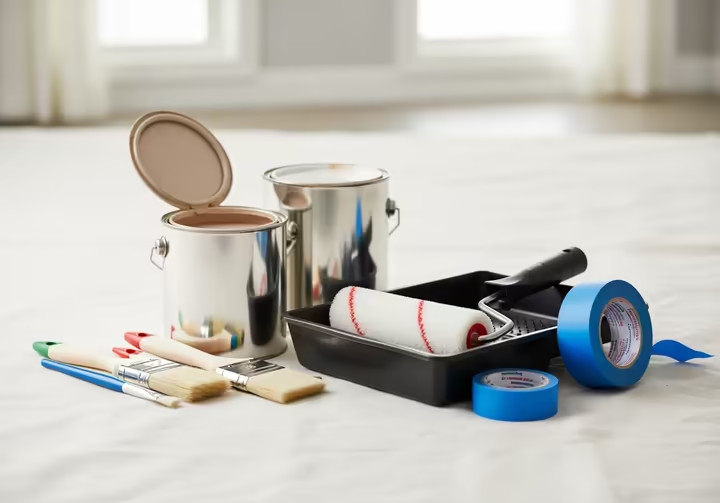
What Each Coat Actually Does
The "two-coat" rule exists for a reason, it’s a system where each layer has a different job. The first coat does the heavy lifting, and the second coat makes it look pretty. Understanding this will stop you from panicking when the wall looks like a mess after round one.
The First Coat (aka The Ugly Coat)
The first coat's main job is coverage. It’s supposed to hide the old color or primer. But be warned, this stage looks awful. After all your hard work, the wall will be patchy, streaky, and uneven.
Don't panic! This is normal. Your wall (especially if it’s fresh drywall or was painted with flat paint) is thirsty. It soaks up the first coat at different rates, causing that blotchy look.
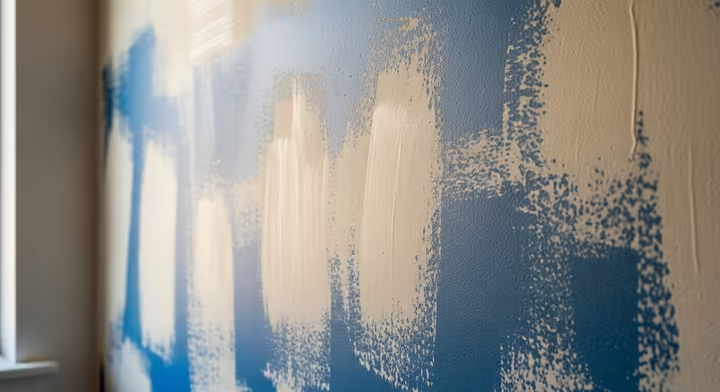
Whatever you do, don't try to "fix" semi-dry spots by rolling over them again, you'll just make the texture worse. Just accept the first coat for what it is: an ugly but necessary foundation.
The Second Coat (The Finishing Coat)
The second coat is where the magic happens. It evens everything out, covering the streaks and missed spots (painters call 'em "holidays") to create that smooth, professional finish. The first coat sealed the wall, so this second coat will glide on easier and you'll use less paint.

More importantly, the second coat makes the paint tough. It builds up the thickness needed to make the wall durable, washable, and scrubbable. Skipping it means you're not getting the protection you paid for.
Primer: The Real MVP
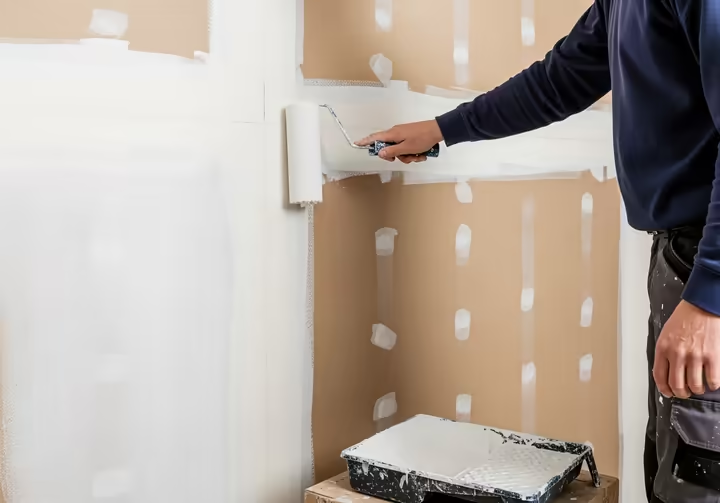
Before you even think about your color, you need to think about primer. Seriously, don't skip it. Good priming is what separates a frustrating paint job from a great one.
What Primer Actually Does
Primer isn’t supposed to look pretty. Its job is to make your expensive paint's job way easier. It does three main things:
- Seals thirsty surfaces. New drywall and bare wood are like sponges. Primer seals them up so they don't drink all your paint, which prevents a blotchy finish and saves you money.
- Helps paint stick. Paint can't grip onto slick surfaces like old glossy paint or metal. Bonding primer gives it something to grab, preventing peeling and chipping later on.
- Hides stains & old colors. Primer creates a clean, blank slate. It stops old, dark colors from peeking through and messing up your new shade. For tough stuff like water stains or marker, you need a special stain-blocking primer, regular paint won't cover them.
What About "Paint-and-Primer-in-One"?
These products cause a lot of confusion. They aren't a magical mix of two different things, they're just thicker paints with more solids (the stuff left after the water evaporates). This lets them hide things a bit better than cheap, thin paint.
They're fine for simple jobs. If you're repainting a wall that's in good shape with a similar color, go for it. The first coat acts like a primer, and the second is your finish coat.
But these are not a substitute for real, problem-solving primer. You absolutely must use a separate, dedicated primer for:
- New, unpainted drywall. It needs a special PVA drywall primer to seal it properly. No excuses.
- Bare wood. You need a wood primer to stop natural oils (tannins) from bleeding through and causing yellow stains.
- Stained walls. Water stains, smoke, or ink need a powerful stain-blocking primer. A 2-in-1 paint can't handle it.
- Glossy surfaces. You need a real bonding primer to make the new paint stick to old, shiny paint.
- Big color changes. Using a primer to hide a dark color is much cheaper than applying four coats of expensive topcoat paint.
So... One, Two, or More Coats?
Once you've primed correctly, a few other things will decide your final coat count. The color you pick, the quality of your paint, and the wall itself all play a part.
Color Changes
- Going from Dark to Light. Covering navy blue with off-white is tough. Even with primer, you’ll likely need two or even three coats of your new color to stop the dark from showing through.
- Going from Light to Dark. Here's a pro tip. If you're painting a rich, dark color like burgundy over a white wall, use a gray-tinted primer first. The neutral gray base helps the deep color look rich faster, often saving you a whole coat of expensive paint.
- The Tricky Colors: Reds and Yellows. Ever tried to paint a room bright red and ended up doing five coats? It's not you, it's the paint. The pigments used for these super-bright colors are naturally a bit transparent. They are famous for needing a tinted primer and at least three topcoats.
Paint Quality and Sheen Matter
- Paint Quality. The price difference between cheap and premium paint is real. Expensive paint has more... well, paint in it (pigments and binders). Cheap paint is mostly filler and water that evaporates, leaving a thin film that doesn't cover well. Two coats of good paint often hide better than four coats of cheap stuff.
- Paint Sheen. Flat and matte paints have more pigment, so they're great at hiding bumps and flaws. Shiny paints (eggshell, satin, semi-gloss) have less pigment and more binder. They’re tougher and easier to clean, but they show *every single imperfection*. For any sheen above matte, two perfect coats is the bare minimum.
What Kind of Wall Are You Painting?
- New Drywall. We've said it before, and we'll say it again. It must be sealed with 1-2 coats of PVA primer first. Then, two topcoats will do the trick.
- Patched Walls. A spackle patch is like a tiny, thirsty desert on your wall. You have to spot-prime it! If you don't, you'll see a dull, blotchy spot forever. This is called "flashing," and it screams "amateur job."
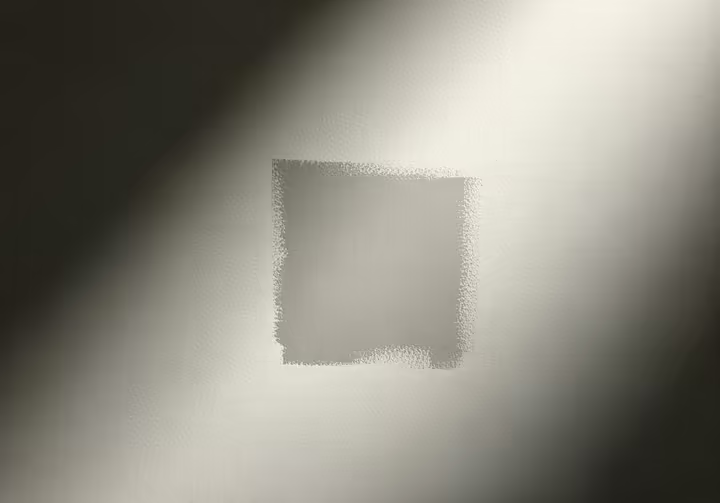
- Textured Walls. Texture means more surface area. A single coat will just hit the "peaks" and miss the "valleys," leaving a speckled look. You need a second coat (and a thick roller) to get paint into all those nooks and crannies.
What About Trim and Ceilings?
Trim and ceilings need a slightly different approach. They have their own unique quirks.
Painting Trim
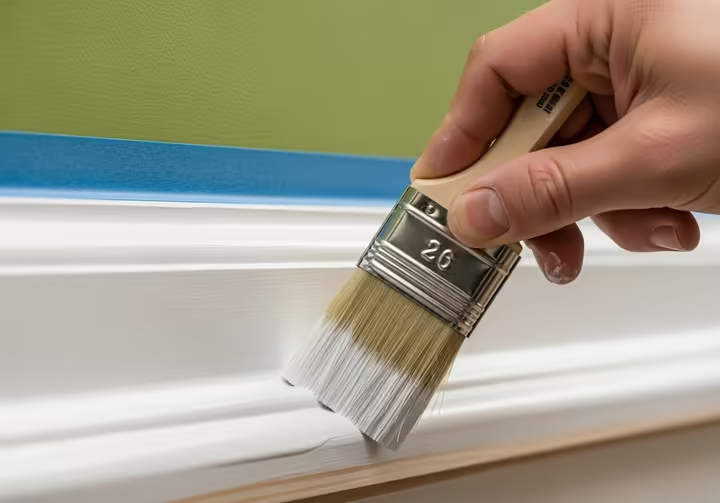
Trim gets beat up. It's bumped, scuffed, and touched constantly. That's why you use tough, durable paint like satin or semi-gloss.
The rule for trim is simple and shouldn't be broken: one coat of quality primer, followed by two coats of paint. And that "pre-primed" trim from the store? The primer on it is cheap stuff meant to protect it during shipping. Sand it lightly and re-prime it for a finish that actually lasts.
Painting Ceilings
Ceilings are tricky. Light from windows shines across them, highlighting every single roller mark and streak. That's why ceiling paint is super flat, it helps hide imperfections.
So, can you get away with one coat? Maybe. If you're just refreshing a clean, white ceiling with the exact same high-quality paint, one good coat *might* work.
For any other situation, though, two coats are much safer. If you're covering stains (spot-prime them first!) or just want to guarantee a perfectly even, non-streaky finish, do the second coat. You won't regret it.
| Painting Scenario | Required Primer? | Recommended Primer Type | Typical Topcoats | Key Considerations |
|---|---|---|---|---|
| New, Unpainted Drywall | Yes, Mandatory | 1-2 coats PVA Drywall Primer | 2 | Stops the wall from drinking your paint. Non-negotiable. |
| Repainting (Similar Color, Good Condition) | No (if using 2-in-1 paint) | N/A or Self-Priming Paint | 2 | The first coat acts as a sealer, the second is the finish. |
| Covering Stains (Water, Smoke) | Yes, Mandatory | 1-2 coats Stain-Blocking Primer | 2 | Only a real stain-blocking primer will work. Paint won't hide it. |
| Color Change: Light over Dark | Yes, Highly Recommended | 1-2 coats High-Hide Primer | 2-3 | Primer does the hard work so your expensive paint doesn't have to. |
| Color Change: Dark over Light | Yes, Recommended | 1 coat Gray-Tinted Primer | 2 | The gray base helps rich colors pop and saves you a coat. |
| Difficult Colors (Red, Yellow) | Yes, Mandatory | 1-2 coats Gray or Tinted Primer | 3-5 | These pigments are see-through. Be patient and expect extra coats. |
| Painting over High-Gloss Paint | Yes, Mandatory | 1 coat Bonding Primer | 2 | You must scuff-sand the wall first, then use a bonding primer. |
| Interior Trim (Wood) | Yes, Mandatory | 1 coat Wood/Enamel Primer | 2 | Creates a tough, smooth finish for high-traffic areas. |
| Ceilings (Stain-Free Refresh) | No | N/A | 1-2 | One coat might work, but two guarantees no streaks. |
How to Know When You're Done
The wall itself will tell you if it needs another coat. You just have to know how to look. Always wait until the paint is fully dry to the touch (usually 1-4 hours) before inspecting it or adding another coat.
Don't just rely on the overhead light. Get a portable work light and hold it close to the wall, shining it across the surface at a sharp angle. This "raking light" will show every tiny flaw. It's the same trick pros use.
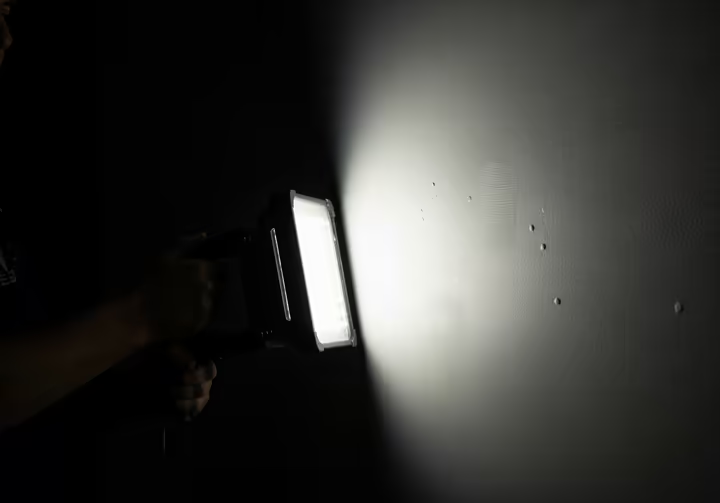
Look for these issues:
- Patchiness or "Holidays": Thin spots or little missed areas where the old color peeks through.
- Streaks or Roller Marks: Visible lines or textures left by your roller.
- Uneven Sheen ("Flashing"): The most common problem. It's when some spots look duller or shinier than others, especially over patches.
You're looking for a perfectly even, solid wall. If you see any of these flaws, the wall is telling you the job isn't done. Time for another coat.
The Final Verdict
In the end, the question isn't about a number. It's about a quality finish. The right number of coats is however many it takes to make the wall look great and last a long time.
To get the best results, focus on three things:
- Good Prep. Start with a clean, dry wall.
- Smart Priming. Use the *correct* primer for your specific problem. This is your secret weapon.
- Decent Paint. Good paint costs more upfront but saves you the time and effort of applying an extra coat of cheap stuff.
When you stop just counting coats and start focusing on the final result, you're on your way to a paint job you can be proud of.
Works cited
- How Many Coats of Paint Do I Need? - Complete Guide 2023, https://www.paintworld.com.au/blogs/diy-area/how-many-coats-of-paint
- Understanding What Determines the Number of Coats Needed, https://renaissancepainting.ca/how-to-get-a-great-paint-job-every-time-understanding-what-determines-the-number-of-coats-needed/
- How Many Coats of Paint for Walls, Ceilings, and More? - Chagrin Falls Painting, https://cfallspainting.com/determining-the-right-number-of-paint-coats/
- How Many Coats of Paint in Every Situation | Brad the Painter, https://www.bradthepainter.com/how-many-coats-of-paint/
- How to Inspect Paint Job by Contractor - Reddit, https://www.reddit.com/r/paint/comments/111kbu8/how_to_inspect_paint_job_by_contractor/
- Ask The Painter: Do I Need Two Coats or One? - Southern Painting, https://southernpainting.com/ask-the-painter/ask-the-painter-do-i-need-two-coats-or-one/
- www.benjaminmoore.com, https://www.benjaminmoore.com/en-us/interior-exterior-paints-stains/how-to-advice/painting-101/fix-painting-mistakes#:~:text=Why%20it%20happens%3A%20Uneven%20or,to%20get%20a%20uniform%20finish.
- Why is my paint patchy on my wall? - Earthborn Paints, https://earthbornpaints.co.uk/why-is-my-paint-patchy-on-my-wall/
- Tips/Faqs/Why do i have a patchy paint finish - British Paints, https://www.britishpaints.co.nz/how-tos-and-advice/faqs/why-do-i-have-a-patchy-paint-finish/
- Do I need a second coat of paint or can I touch-up spots with a roller? : r/DIY - Reddit, https://www.reddit.com/r/DIY/comments/10cac3b/do_i_need_a_second_coat_of_paint_or_can_i_touchup/
- How to Fix 5 Common Painting Mistakes | Benjamin Moore, https://www.benjaminmoore.com/en-us/interior-exterior-paints-stains/how-to-advice/painting-101/fix-painting-mistakes
- Do I really need a second coat of paint? + bonus question about ceiling paint - Reddit, https://www.reddit.com/r/paint/comments/18x0m4u/do_i_really_need_a_second_coat_of_paint_bonus/
- How Many Coats of Paint Do I Need?, https://coatpaints.com/blogs/how-to-paint/how-many-coats-of-paint-do-i-need
- Primer (paint) - Wikipedia, https://en.wikipedia.org/wiki/Primer_(paint)
- How to Use a Paint Primer | The Paint Shed, https://www.thepaintshed.com/tips-advice/how-to-use-a-paint-primer
- How Many Coats of Primer on New Drywall: Quick Guide for DIYers - Chicago Handyman, https://chicagohandyman.net/how-many-coats-of-primer-on-new-drywall/
- Paint Primer: Why It's Necessary? (Basic Guide) - Premier Painting, https://www.premierpainting.com.au/blog/why-primer-before-paint/
- Buy the Right Amount of Paint to Reduce Waste | Buying Tips - Paintcare.org, https://www.paintcare.org/buy-right/
- What is Primer Paint? Why is It Important? - Baumerk, https://www.baumerk.com/en/blog/what-is-primer-paint
- The Truth About Paint and Primer In One - Resource Center - Spectrum Paint, https://spectrumpaint.com/resource_blog/resource_blog_posts/view/75/the-truth-about-paint-and-primer-in-one
- What Is Paint Primer? Everything You Need to Know - The Spruce, https://www.thespruce.com/necessary-to-prime-before-painting-1821154
- How Many Coats of Primer Do You Really Need? | Five Star Painting, https://www.fivestarpainting.com/blog/2021/october/what-is-primer-and-do-i-need-one-or-two-coats-/
- What is Primer Paint | When to use Paint Primer | Clare, https://www.clare.com/blogs/articles/do-you-need-paint-primer
- Paint and Primer in One, Does it Work? - Paper Moon Painting, https://papermoonpainting.com/paint-and-primer-in-one/
- Paint and Primer in one...FML : r/sherwinwilliams - Reddit, https://www.reddit.com/r/sherwinwilliams/comments/14mgd8y/paint_and_primer_in_onefml/
- Does Paint and Primer in One Work? What to Know Before Buying - The Spruce, https://www.thespruce.com/self-priming-paint-1822383
- How to Choose the Right Paint - Dunn-Edwards, https://www.dunnedwards.com/explore/how-to/videos/how-to-choose-the-right-paint/
- Pros and Cons of Using Paint and Primer in One - Two Day Painting, https://twodaypainting.com/blog/what-are-the-pros-and-cons-of-using-paint-and-primer-in-one/
- How Many Coats of Primer Do You Need? - The Spruce, https://www.thespruce.com/how-many-coats-of-primer-7486532
- Primer vs. Paint With Primer: Which Is Better? - Aboff's Paints, https://aboffs.com/blogs/resources/primer-vs-paint-with-primer
- Why does bright & white paint take so many coats to achieve coverage? - General Finishes, https://generalfinishes.com/faq/why-does-bright-white-paint-take-so-many-coats-to-achieve-coverage
- generalfinishes.com, https://generalfinishes.com/faq/why-does-bright-white-paint-take-so-many-coats-to-achieve-coverage#:~:text=Additionally%2C%20bright%20pigments%20have%20smaller,hide%20and%20requires%20fewer%20coats.
- I'm painting a room a deep red color. I primed beforehand. The first coat of red looks absolutely awful. Blotchy and uneven. Is this typical for a deep color? Should I wait for coat 2 to deal out? Photo inside. : r/HomeImprovement - Reddit, https://www.reddit.com/r/HomeImprovement/comments/bi8kst/im_painting_a_room_a_deep_red_color_i_primed/
- How Many Coats Of Paint Will I Need - CT Pro Painters, https://franklinpainting.com/blog/how-many-coats-of-paint-will-i-need/
- Are there major differences in paint brands? : r/DIY - Reddit, https://www.reddit.com/r/DIY/comments/1al18d7/are_there_major_differences_in_paint_brands/
- Why Specifying Paint Is Important - Sherwin-Williams, https://www.sherwin-williams.com/architects-specifiers-designers/education/paint-and-color-technology/sw-art-pro-whyspecifyingpaint
- TECH SHEET: VOLUME SOLIDS - AWS, https://de-production-media.s3.amazonaws.com/uploads/techinal_bulletins/54ac433c6137650002150000/TechSheet_volumeSolids.pdf
- When to Use One Coat or Two Coats of Paint | BEHR PRO, https://www.behr.com/pro/onthejob/blog/exterior-repaint/
- A Guide to Understanding Paint Sheens | Marketplace Paints, https://marketplacepaints.com/a-guide-to-understanding-paint-sheens/
- One or two coats when upgrading paint sheen/quality in the same color - Reddit, https://www.reddit.com/r/paint/comments/1hjgkb0/one_or_two_coats_when_upgrading_paint/
- www.bradthepainter.com, https://www.bradthepainter.com/how-many-coats-of-paint/#:~:text=Repainting%20a%20wall%3A%20one%20coat,by%202%20coats%20of%20paint.
- Tips for Painting Drywall including what Drywall Primer to Buy - Bigger Than the Three of Us, https://biggerthanthethreeofus.com/tips-for-painting-drywall/
- corspaint.com, https://corspaint.com/how-to-avoid-flashing/#:~:text=Use%20the%20correct%20products%20for,repair%20after%20paint%20is%20applied.
- From Flashing to Flawless Finish - PPC, https://swppc.com/2022/12/09/from-flashing-to-flawless-finish/
- What am I doing wrong? : r/paint - Reddit, https://www.reddit.com/r/paint/comments/14nyw2i/what_am_i_doing_wrong/
- Drywall patches showing through new paint, have a noticeably different texture than rest of wall. How to fix? - Reddit, https://www.reddit.com/r/drywall/comments/1gtom8s/drywall_patches_showing_through_new_paint_have_a/
- Should I Paint That: Painting Textured Walls - PaintPositive, https://www.paintpositive.com/blog/painting-textured-walls-tips-and-tricks
- www.valspar.com, https://www.valspar.com/en/tips-resources/how-to/project-tutorials/painting-textured-walls#:~:text=When%20painting%20textured%20walls%2C%20you,overlooked%20the%20first%20time%20around.
- Advice for painting on textured walls - Reddit, https://www.reddit.com/r/paint/comments/yvpmdz/advice_for_painting_on_textured_walls/
- Painting Basics - California Paints, https://www.californiapaints.com/painting-basics/
- How To Paint Baseboards & Trim - Glidden, https://www.glidden.com/advice/how-to-paint-baseboards-trim
- www.glidden.com, https://www.glidden.com/advice/how-to-paint-baseboards-trim#:~:text=You'll%20only%20need%20one,before%20moving%20onto%20the%20next.
- How Many Coats Of Paint Is Enough For Trim Moulding? - Spencer Colgan - YouTube, https://www.youtube.com/watch?v=NzVvRRNSp4E
- How many coats of paint do you usually put on new primed baseboards? - Reddit, https://www.reddit.com/r/paint/comments/1afv3zb/how_many_coats_of_paint_do_you_usually_put_on_new/
- Do I need two coats of ceiling paint if the new paint is the same colour? : r/DIY - Reddit, https://www.reddit.com/r/DIY/comments/s1r5q8/do_i_need_two_coats_of_ceiling_paint_if_the_new/
- homeworkspainting.com, https://homeworkspainting.com/one-or-two-coats/#:~:text=Here%20are%20a%20few%20possible,better%20job%20of%20hiding%20flaws.
- How to Paint a Ceiling - Trusted House Painter, https://trustedhousepainter.com/how-to-paint-a-ceiling/
- How Many Coats of Paint Do I Need on a Wall or Ceiling? | splat, https://splatdecoratingsupplies.co.uk/how-many-coats-of-paint-do-i-need-on-a-wall-ceiling-or-new-plaster/
- Proper Dry Time Between Paint Coats: What You Need to Know⏲️, https://tribblepainting.com/how-long-to-wait-between-coats-of-paint/
- How Long Should You Wait Between Coats of Paint? - The Spruce, https://www.thespruce.com/wait-between-coats-of-paint-4770225
- How Long to Wait Between Paint Coats | NewlinePainting, https://www.newlinepainting.com.au/how-long-to-wait-between-paint-coats/
- Homeowner Orientations - Insider Tips for Inspecting the Paint Job, https://warlinepainting.ca/homeowner-orientations-insider-tips-for-inspecting-the-paint-job/
- How to Know if Your Painter Did a Good Job: A Comprehensive Guide, https://righttouchpainting.com/how-to-know-if-your-painter-did-a-good-job-a-comprehensive-guide/
- How to Inspect the Quality of a Completed Residential Paint Job, https://www.brushix.ca/blog/how-to-inspect-the-quality-of-a-completed-residential-paint-job
- Painting Contractor Secrets: How to Tell When Your Paint Has Gone Bad, https://patchandpaintpros.com/blog/painting-contractor-secrets-how-to-tell-when-your-paint-has-gone-bad/
- Paint Quality Inspection Checklist - Pinnacle Painting and Decorating, https://paintwithpinnacle.com/blog/paint-quality-inspection-checklist/